
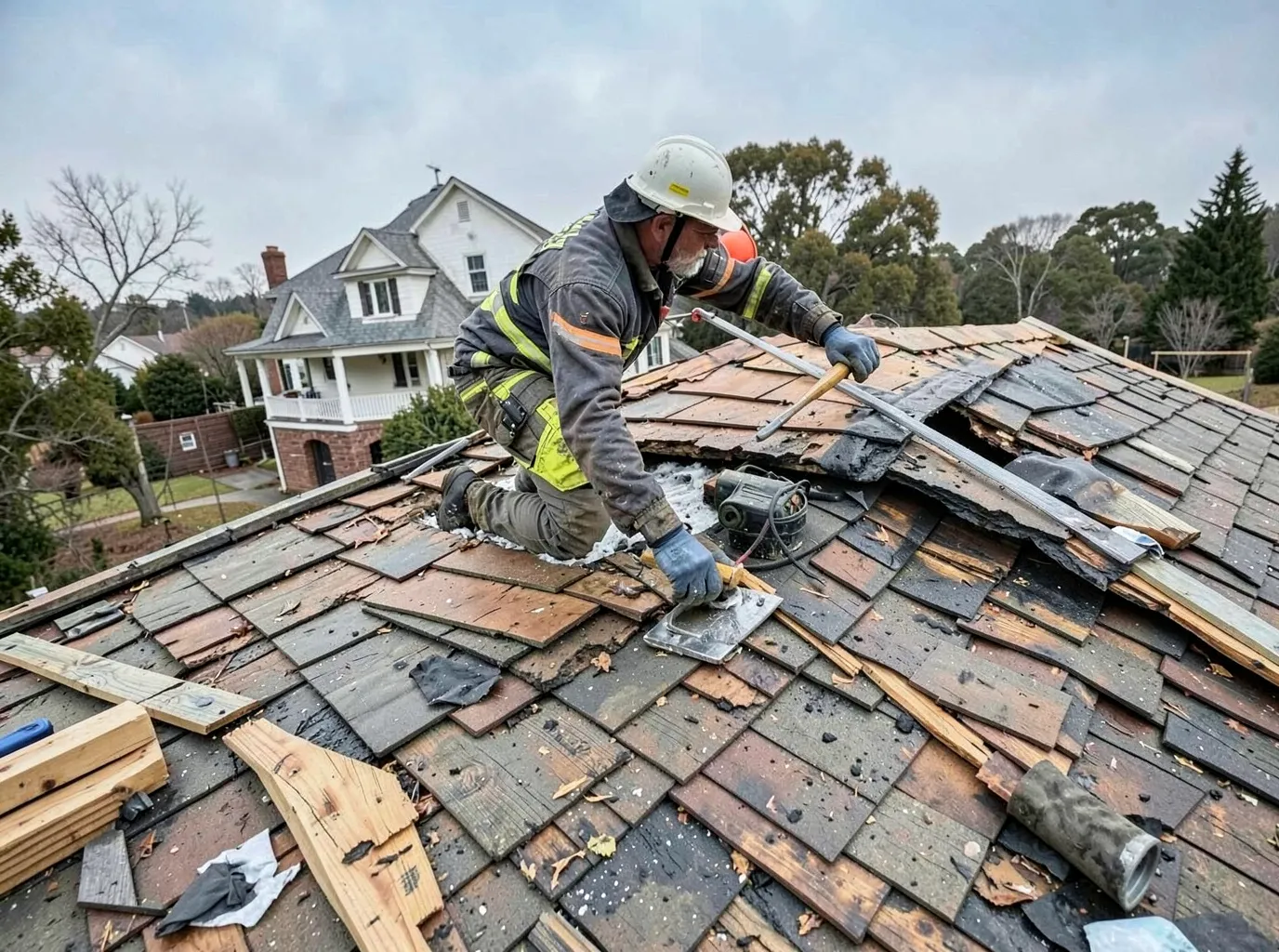
Temple sits in Bell County where spring thunderstorms routinely bring hail and straight-line winds that crack asphalt shingles and lift flashing around chimneys. Homes in North Temple and Hickory Hollow often date to the 1970s and 1980s, so the original shingles have already seen multiple heat cycles from hot summers; one storm can push them past the point of simple patching. We match granule color and shingle profile on site rather than ordering generic bundles, because mismatched patches stand out on the low-pitch roofs common in West Temple.
After a storm we start with a top-down inspection that checks decking under lifted shingles instead of stopping at visible dents. Water that enters during the next rain can travel along rafters and show up weeks later above ceilings in South Temple ranch houses. We carry temporary synthetic underlayment rolls sized for single-truck response so we can button up a section the same day instead of leaving tarps that flap in follow-up wind.
Wind-driven rain also forces water under ridge vents and turbine vents that were never flashed for Temple's gusts. Replacing the vent base and adding extra step flashing takes an extra hour but prevents repeat leaks that insurance adjusters later call "maintenance." We document every replaced shingle with photos tied to the street address so homeowners in Belton or Killeen who file claims have clear before-and-after records.
Because summers stay hot, we avoid dark membrane patches that absorb heat and accelerate aging on adjacent shingles. Light-colored self-adhered flashing stays flexible longer and matches the existing roof color better on the older stock found in Downtown Temple.
Technician insight
In Temple the thing that catches most people out with Storm Damage Roof Repair is how fast water travels under the old 3-tab shingles on 1970s homes in Hickory Hollow once hail cracks the surface; the next spring thunderstorm sends it straight to the decking before homeowners notice anything on the ceiling.
Hail and wind damage on a North Temple ranch
Hail from a May thunderstorm cracked shingles across the south-facing slope. We found two areas where wind had lifted flashing at the chimney and water had already reached the decking. We replaced the damaged courses with matching shingles, reinstalled new step flashing, and added extra underlayment at the valley. No further leaks appeared during the next round of rain.
Storm Damage Roof Repair Services We Offer
✓Hail Impact Shingle Replacement
Removes and replaces individual hail-cracked shingles with matching profiles so the repair blends on 1970s and 1980s homes common in North Temple.
✓Wind Uplift Flashing Repair
Re-secures lifted flashing and drip edges around chimneys and valleys after straight-line winds, preventing water entry during the next thunderstorm.
✓Emergency Tarping and Temporary Seal
Deploys synthetic underlayment and perimeter sealing the same day to keep rain out of storm-damaged sections until permanent materials arrive.
✓Ridge Vent and Turbine Replacement
Replaces vents damaged by wind-driven rain and upgrades flashing to handle Temple's gust patterns on low-pitch roofs.
✓Deck Inspection and Rotten Wood Repair
Checks sheathing under lifted shingles for rot caused by repeated spring storms and replaces damaged sections before new shingles go down.
Storm Damage Roof Repair Cost in Temple, TX
| Service | Typical Range | What Affects It |
|---|---|---|
| Storm damage assessment and photos | $150–$300 | Includes attic check; credited toward repair if work is approved same week |
| Emergency tarping of one slope | $250–$450 | Price rises with two-story access or multiple slopes |
| Hail shingle replacement per square | $180–$320 | Depends on shingle type and whether decking needs replacement |
| Wind-damaged flashing and vent repair | $350–$650 | Typical for one chimney or ridge vent area |
Ranges are typical for Temple, TX and confirmed with an exact written quote before any work starts.
How it works
- 1
Storm Assessment
Walk the roof and attic to map hail hits, wind lifts, and any water stains already showing in ceilings.
- 2
Temporary Protection
Install synthetic underlayment and edge seals to stop immediate water intrusion on the damaged section.
- 3
Material Match And Repair
Source matching shingles and flashing, then replace only the affected courses while preserving the rest of the roof.
- 4
Final Walk And Documentation
Photograph every repaired area and note any adjacent sections that may need attention after the next storm.
Pricing
Most storm repairs start with an assessment visit; larger shingle and flashing jobs vary with roof pitch and how many slopes were hit.