
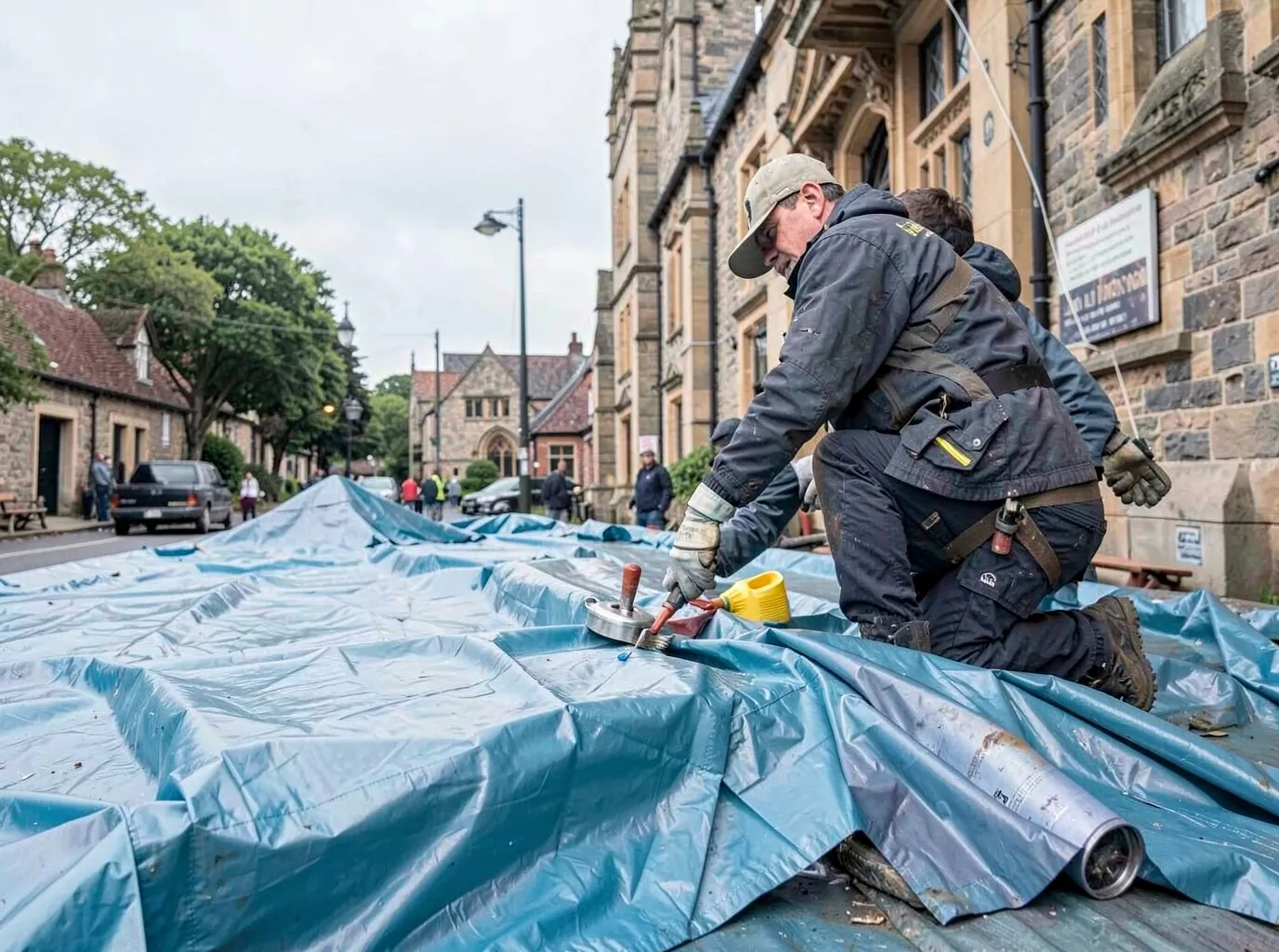
Temple homes built before the 1980s in Downtown Temple and North Temple often have asphalt shingles that crack during the intense spring thunderstorms common in Bell County. When wind-driven rain finds those openings, water travels under the decking fast, especially on the steeper pitches common around Miller Park. Emergency tarping uses reinforced polyethylene sheets weighted and strapped to the deck rather than just draped, because gusts that accompany those storms can lift loose material and turn a small leak into interior damage within hours.
Access matters on the flat terrain near Baylor Scott & White Medical Center where many single-story ranch homes sit close together. Crews must work around mature oaks that drop limbs during storms and around power lines that run close to eaves in West Temple. Proper tarping includes sealing the top edge with compatible flashing tape so water cannot wick behind the tarp during the next rainfall, and leaving weep holes at the bottom so trapped moisture can escape instead of creating mold under the covering.
Tarps are never a permanent fix. In Temple’s hot summers the material expands and contracts daily, loosening fasteners within weeks. Homeowners in Hickory Hollow and South Temple who leave a tarp in place past the initial repair window often find the underlying deck has rotted further by the time a full replacement is scheduled. The goal is always to buy enough dry time for a proper inspection and repair before the next front moves through from the west.
Technician insight
In Temple the thing that catches most people out with Emergency Roof Tarping is the sudden spring thunderstorms that hit older North Temple homes with 4:12 pitches. Homeowners often think a tarp just needs to be thrown over the hole, but without furring strips screwed into rafters the next 40 mph gust peels it right off and the water keeps coming.
Hail-damaged shingles near Miller Park
A homeowner in South Temple called after a line of storms opened leaks around a skylight. We found cracked shingles and torn underlayment on the west-facing slope. A reinforced tarp was anchored into the rafters and sealed at the top edge before the next front arrived. No further interior water reached the ceilings.
Emergency Roof Tarping Services We Offer
✓Storm Damage Tarping
Immediate coverage after spring thunderstorms to prevent water entry through wind-lifted shingles on Temple homes.
✓Wind-Driven Leak Tarping
Targeted tarping along gable ends and valleys where Bell County winds push rain under older flashing details.
✓Temporary Hail Impact Tarping
Quick protection over dented shingles and compromised underlayment until a full assessment can be scheduled.
✓Commercial Roof Tarping
Larger reinforced tarps for flat and low-slope sections on buildings near the Temple Railroad and Heritage Museum.
✓Residential Emergency Tarping
Same-day response for active interior leaks in single-family homes across North Temple and Hickory Hollow.
Emergency Roof Tarping Cost in Temple, TX
| Service | Typical Range | What Affects It |
|---|---|---|
| Single-story residential tarp | $250–$450 | Most common size in West Temple and Hickory Hollow |
| Two-story residential tarp | $400–$650 | Higher access and safety equipment required |
| Commercial low-slope section | $600–$950 | Larger sheets and ballast needed |
| After-hours or weekend response | $150–$250 added | Outside Mon–Fri 8–6 and Sat 9–2 |
Ranges are typical for Temple, TX and confirmed with an exact written quote before any work starts.
How it works
- 1
Site Assessment
Walk the roof and attic to locate active water paths, note pitch, and check for rotted decking around the leak.
- 2
Material Selection
Choose heavy-duty reinforced poly sized to extend past the damaged area by at least four feet on all sides.
- 3
Securement
Anchor the tarp with furring strips and screws into rafters, not just shingles, then seal the uphill edge.
- 4
Final Walk-Through
Confirm no new interior drips and provide the homeowner with a timeline for permanent repair.
Pricing
Price depends on roof height, pitch, and how far crews must carry materials from the truck.